When is the best time to visit Egypt?
From October to April the temperatures are comfortable everywhere in Egypt: that is the best window for a first trip. Summer stays workable if you start at dawn and accept the heat of Upper Egypt.
Published on Sunday, 5 April 2026Updated on Monday, 31 August 20268 min read

The question comes up in almost every conversation before a first trip to Egypt, and the short answer is simple: between October and April. The useful answer has more nuance, because "Egypt" actually covers several climates, and because the best season depends as much on what you want to see as on the thermometer.
What is the most pleasant time of year to visit Egypt?
From October to April the whole country is comfortable. Days are sunny and dry, daytime temperatures usually sit somewhere between the low twenties and the low thirties Celsius depending on region and month, and evenings turn genuinely cool, especially in the desert. This is the season when you can walk an archaeological site for several hours without the heat becoming the main event of the day.
October–November and March–April are, from where we stand, the two most interesting windows: the heat has dropped or has not yet settled in, and the crowds are noticeably thinner than in midwinter. An excursion like the half-day at the Giza pyramids and the Sphinx is a completely different experience at eight in the morning in November and at eleven in January, once several coaches have arrived.
Can you visit Egypt in the middle of summer?
Yes, provided you organise the day differently. From June to September the heat is real: Cairo is heavy, and Upper Egypt regularly passes forty degrees around midday. That is not a reason to give up on the trip; it is a reason to start early.
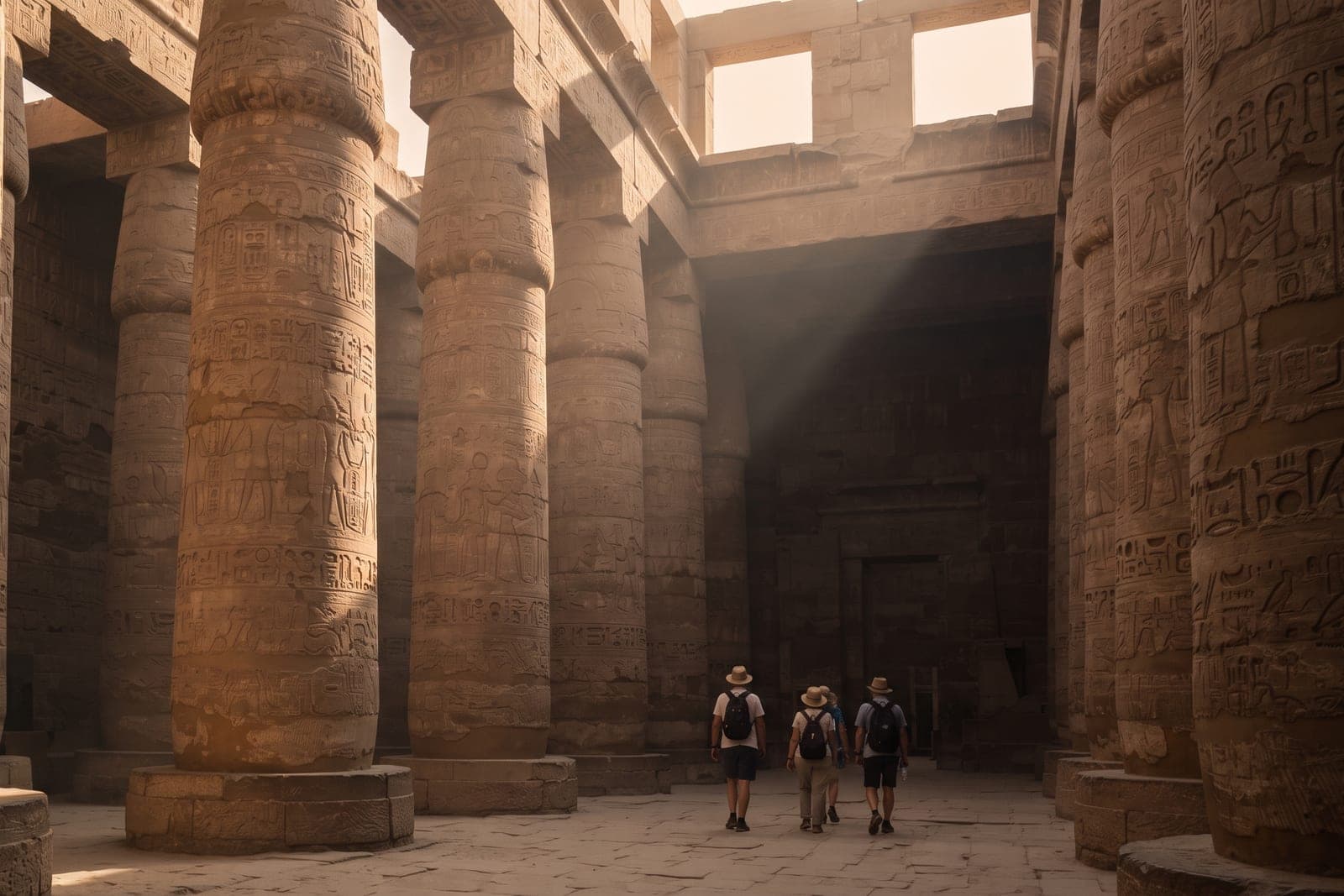
In practice that means a dawn departure, outdoor sites before eleven, a long shaded break through the hottest part of the day, then a museum or a covered site late on. That is exactly how our summer excursions are built, and it is also why pickup happens at your hotel: what exhausts people in summer is not the visit, it is the travel and the waiting in the sun.
- Carry far more water than you think you need, and drink before you feel thirsty.
- A wide-brimmed hat and sunglasses, more useful than sunscreen on a site with no shade.
- Closed shoes: sand and stone heat up fast.
- Accept splitting the day in two rather than running it end to end.
Summer has advantages that rarely get mentioned: the sites are far emptier, flights and hotels get cheaper, and a tomb in the Valley of the Kings with nobody else in it is worth the early start.
What is the best time to visit Cairo and Giza?
Cairo and Giza work all year. Winter is mild, summer hot but bearable, and most visits alternate between outdoors and indoors — an archaeological plateau in the morning, a museum in the afternoon. If you only have a few days and they fall in July, do not give up: adjust the timings.
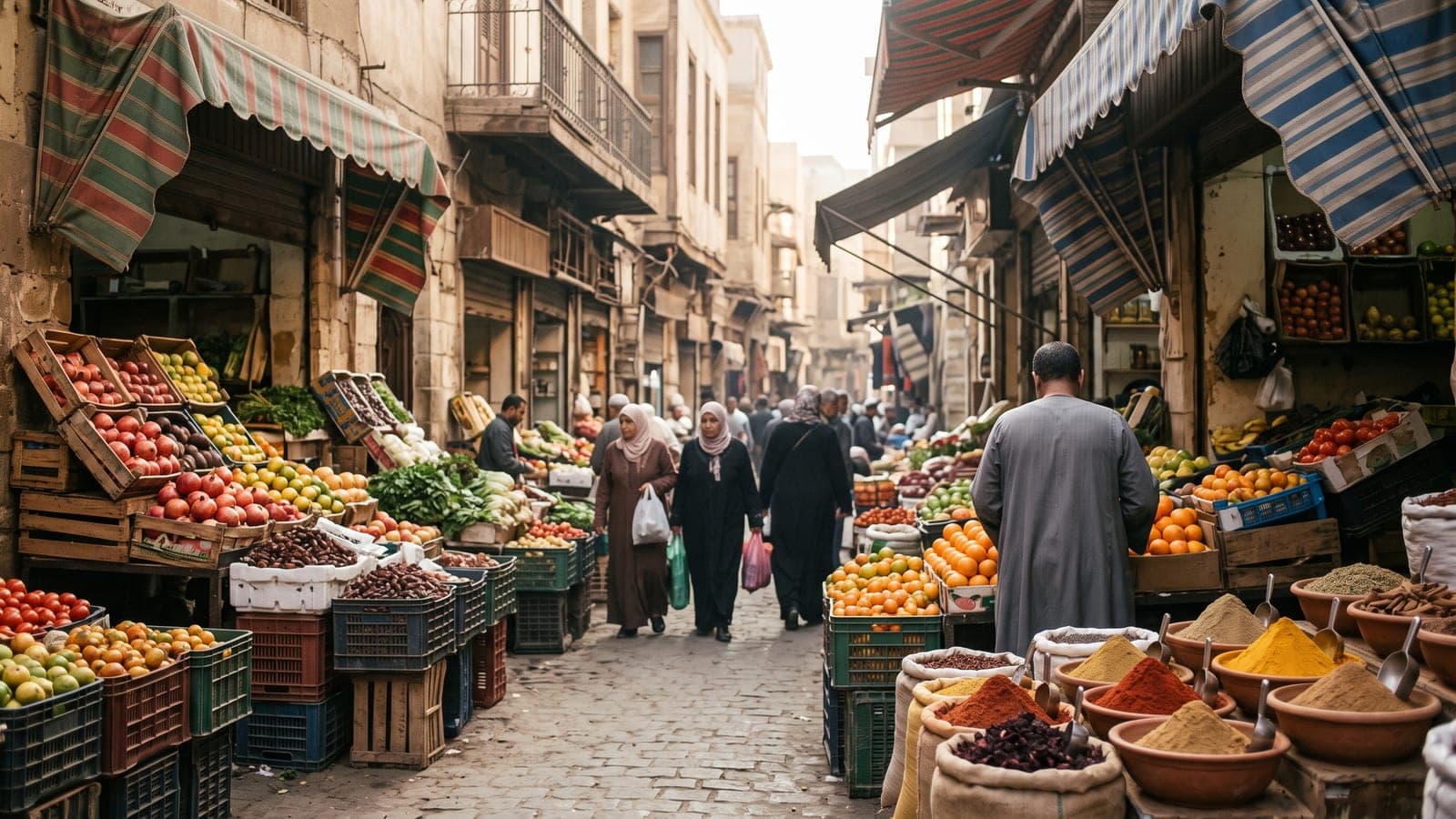
The real constraint in Cairo is not the season but the hour. Traffic governs everything, and a visit that starts at eight bears no resemblance to the same visit started at ten. That holds for Old Cairo and Khan el-Khalili just as much as for the Giza plateau.
When should you go for Luxor and Aswan?
Upper Egypt is where the season genuinely matters. Luxor and Aswan are markedly hotter and drier than Cairo, all year round. From November to March the climate there is ideal: bright, comfortable days and cool nights. From May to September the heat becomes the organising fact of the day.
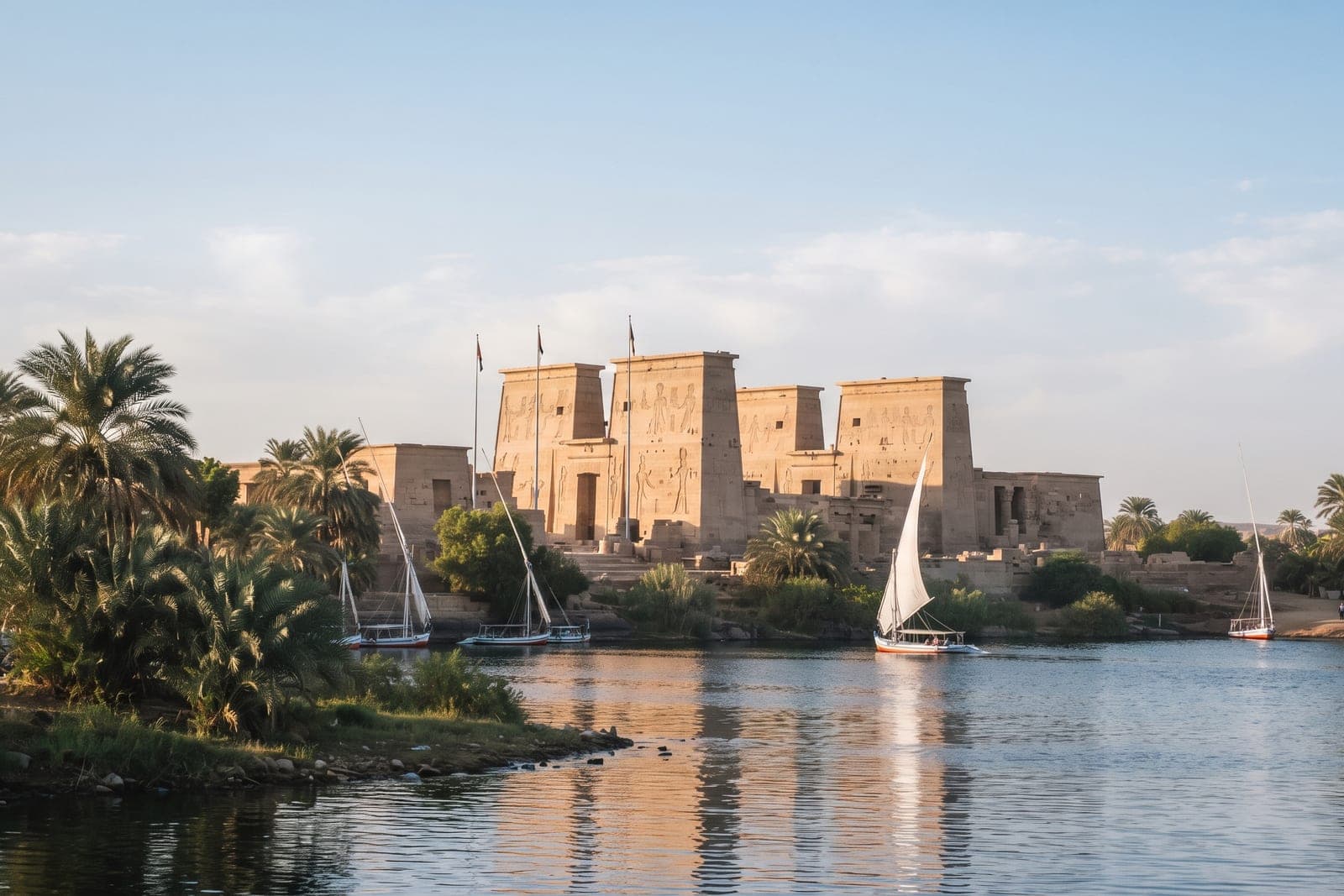
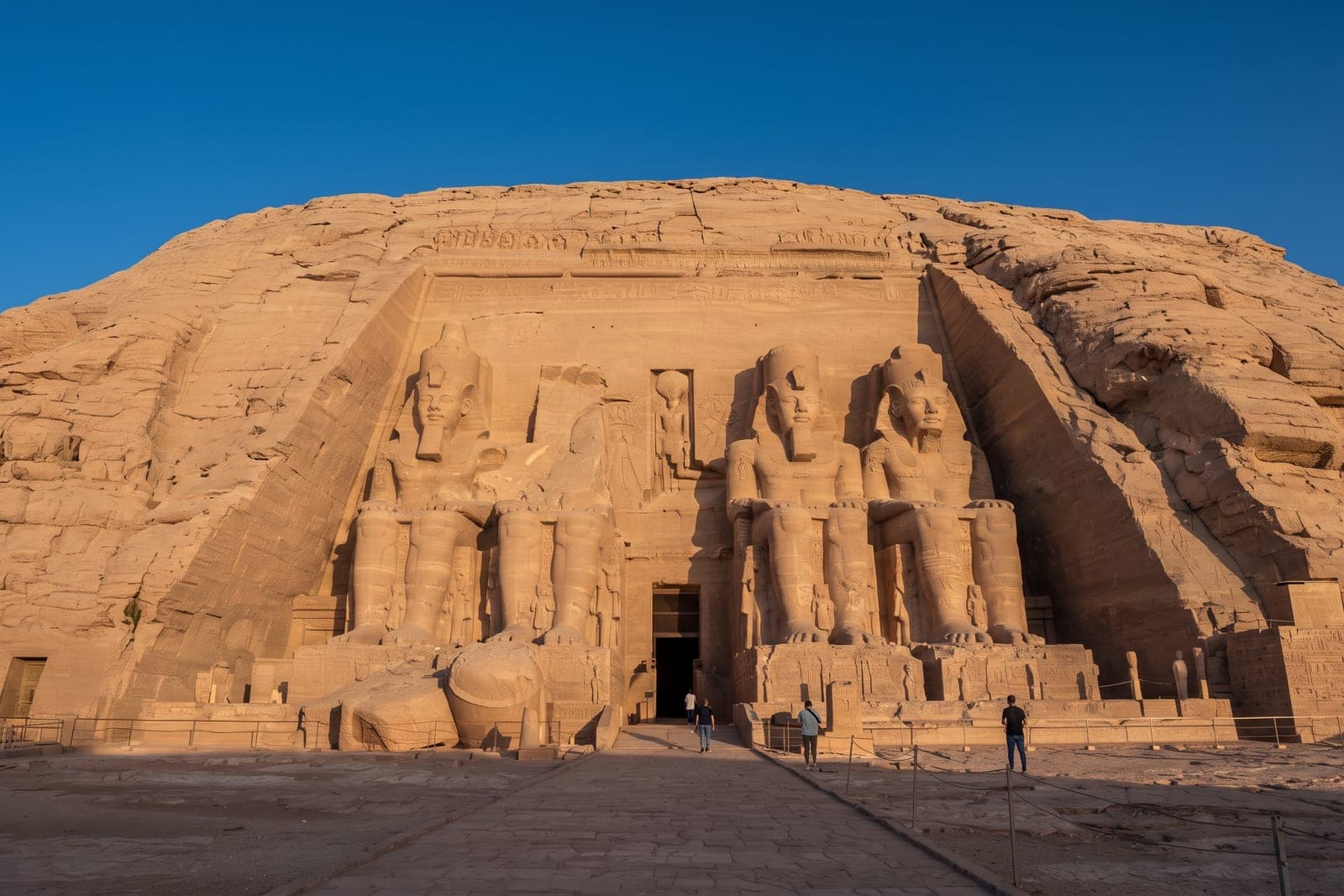
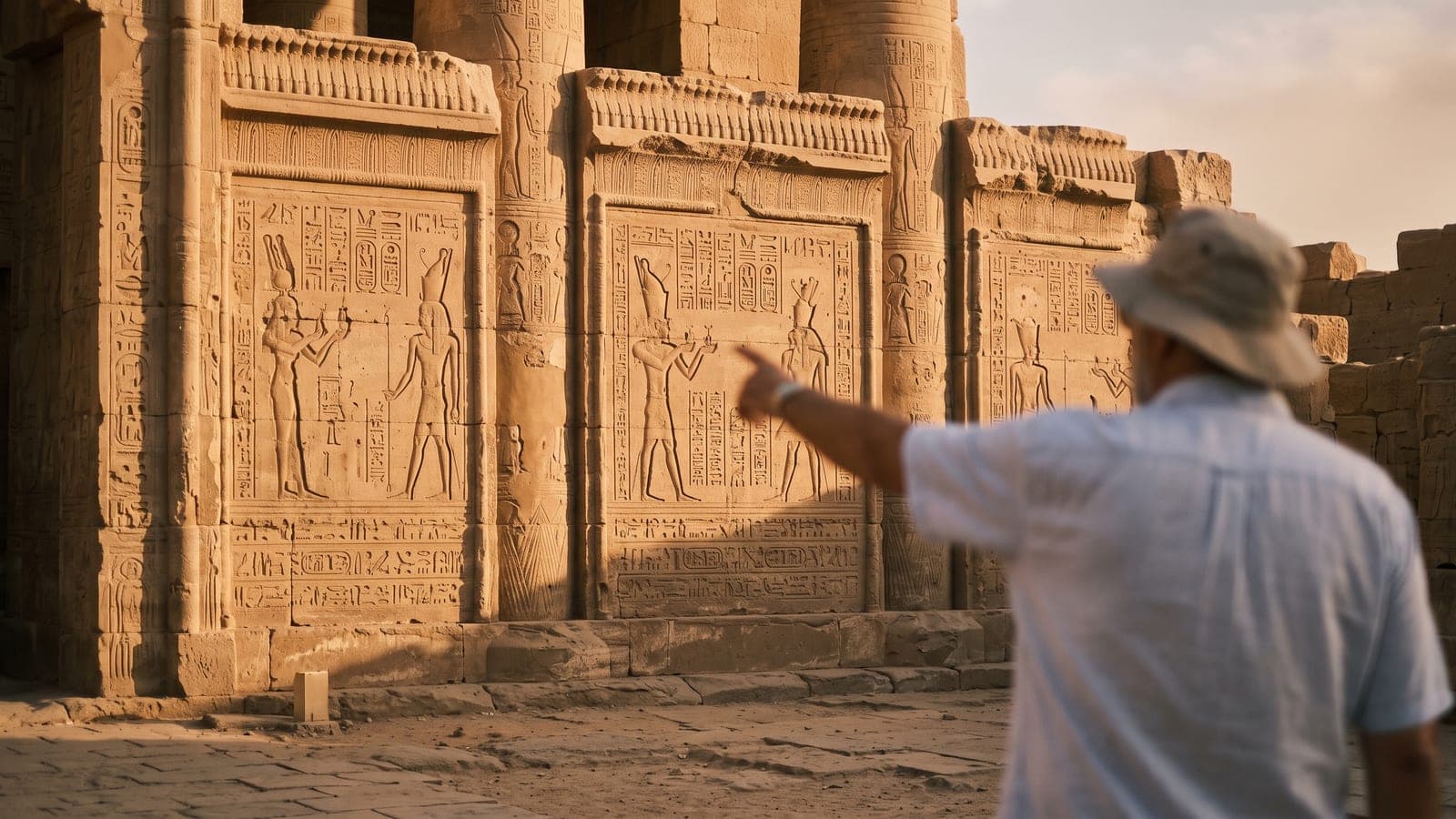
If your trip is built around temples and tombs — Karnak, the Valley of the Kings, Philae, Abu Simbel — aiming for winter is the comfortable choice. Abu Simbel in particular means several hours on the road from Aswan: it is a long day, and doing it in August does not cost the same physically as doing it in December.
Does the time of year affect prices and crowds?
Considerably. The tourist high season runs roughly from December to February, with a sharp peak around the end-of-year holidays: that is when flights and hotels cost the most and the sites are busiest. The shoulder seasons — October–November and March–April — are often the better bargain: still-pleasant weather, more reasonable prices, shorter queues.
Guide fees, on the other hand, do not follow those swings with us: our prices are the same all year, and you can check them on every excursion page. It is flights, accommodation and sometimes the cruise that move a budget from one season to the next — something we go through in our article on the budget for a trip to Egypt.
Are there periods worth avoiding for climate or religious reasons?
No period is off limits. Two things are simply worth anticipating. The first is Ramadan: the fasting month changes the rhythm of the day, some restaurants close during daylight hours, traffic becomes dense just before the fast is broken, and the evening atmosphere is something else entirely — many travellers find it wonderful. The dates shift by around eleven days a year, so check the calendar for your travel year rather than relying on a remembered rule of thumb.
The second is the end-of-year holidays and the Egyptian school holidays, when the sites also fill with local visitors. Nothing disqualifying, but if you are looking for quiet, these are not the weeks for it.
What is the best time of year for a Nile cruise?
A cruise between Luxor and Aswan is best done between November and March. The boat often sails early in the morning or overnight, and the stops happen during the day, outdoors: precisely the format that suffers most from summer heat. In winter, those same stops become one of the finest ways to see Upper Egypt.
If your dates are fixed and fall outside that window, the answer is not to abandon the idea but to rebuild the programme around the cooler hours. That is exactly what we do when we put together a tailor-made trip: the season is an input, not an obstacle.