Tipping and baksheesh in Egypt: the practical guide
Baksheesh is a normal social custom in Egypt, given for a small service rendered; it is distinct from the more formal tip left for a guide, a driver or hotel staff.
Published on Monday, 15 June 2026Updated on Monday, 31 August 20267 min read
This is probably the subject that worries first-time visitors to Egypt most, far more than the heat or the food. The fear runs both ways: looking mean, or being taken advantage of. Both dissolve fairly quickly once you understand what baksheesh is actually for.
What exactly is baksheesh?
Baksheesh (بقشيش) is a small sum given for a service rendered, often a minor one: someone showed you the way, carried a bag, held a door, kept an eye on your vehicle, helped you find a space. It is an old and entirely unremarkable practice, part of how the day-to-day economy works.
It needs separating from two things it often gets confused with. It is not charity: there is a service in exchange, however small. And it is not a tip in the European sense, left at the end of a meal or a service; tipping exists in Egypt too, but it follows different rules.
Is baksheesh mandatory in Egypt?
No, nothing legally obliges you. In practice it is expected in a great many situations, and refusing across the board creates real awkwardness on both sides. The right stance is neither to hand money to everyone constantly nor to refuse on principle, but to give when a service has genuinely been done for you.
How much should you give a guide or a driver?
We do not publish a scale, deliberately: the relevant amounts depend on the length of the service, the region and the movement of the Egyptian pound, and a figure printed today would be wrong in six months. The principle, on the other hand, does not move.
- A tip for a guide or a driver is given at the end of the service, not through the day, and it scales with duration: a full day does not call for the same as a half-day.
- It comes on top of the agreed fee, never instead of it. With JC Tours the posted price is complete: a tip is entirely at your discretion and nobody will ask you for one.
- If you are unsure, just ask your guide what is reasonable for the driver. It is a normal question and you will get a straight answer.
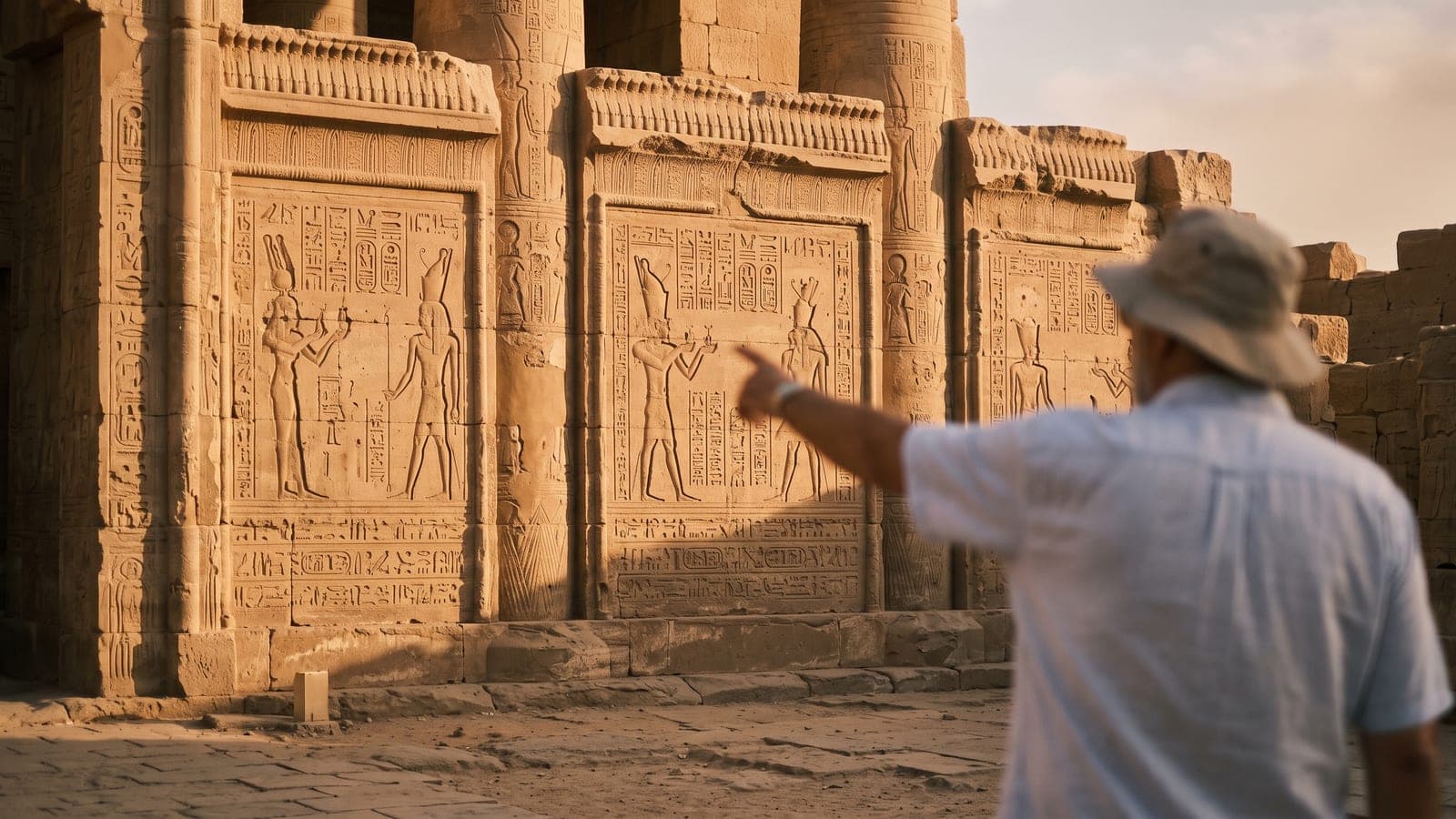
On our excursions, private transport is included in the price, which means there is a driver as well as a guide. They are two separate people and a tip, if you give one, is given separately. How a typical day runs is set out on each page — for example for Old Cairo and Khan el-Khalili.
Should you tip at hotels and restaurants?
At a hotel, the custom is to leave something for whoever carries your bags up and for housekeeping. In restaurants the bill often already includes service and tax; a little extra is appreciated for attentive service, but it is optional and modest.
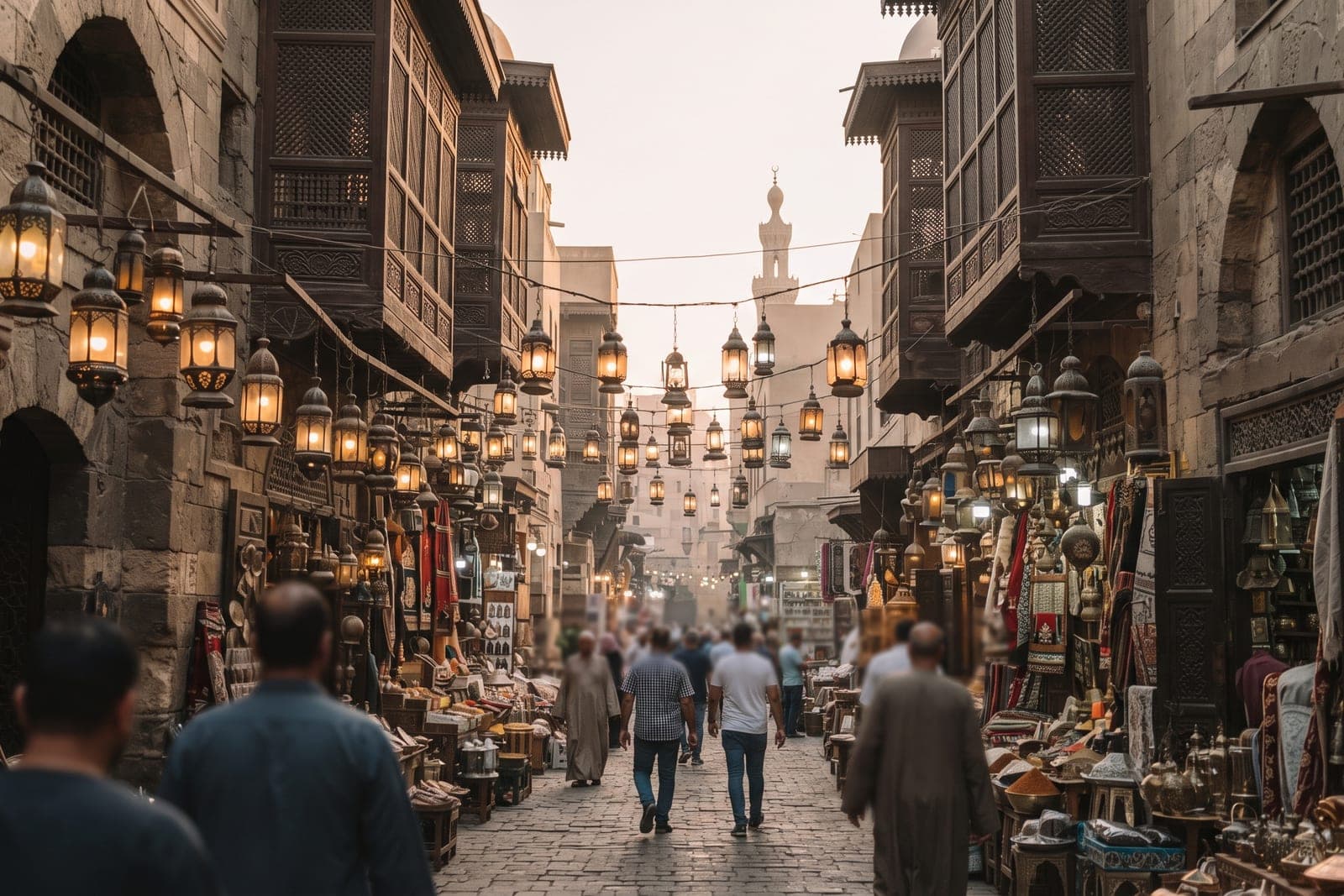
In neighbourhood cafés, especially around Khan el-Khalili, the convention is looser: rounding the bill up is plenty. These are places where people sit for a long time over a small order, and nobody expects a grand gesture.
How do you tell normal baksheesh from a disguised scam?
The difference comes down to one thing: did you ask for the service? Normal baksheesh rewards something you wanted. An abusive solicitation always starts with a service you did not request — a photo taken with your phone without asking, a "shortcut" pressed on you, a camel led over while you were looking elsewhere.
- The service was not requested, and the request for money follows immediately.
- The amount is quoted in euros or dollars rather than Egyptian pounds.
- The tone rises if you decline, or you are followed for a few metres.
- You are offered a trip to "just look at" a shop, a workshop or a papyrus institute.
In those cases a calm, unaggressive refusal almost always suffices: "la, shukran" — no, thank you — while continuing to walk. Scams deserve their own treatment, and we set them out in our article on avoiding scams in Egypt.
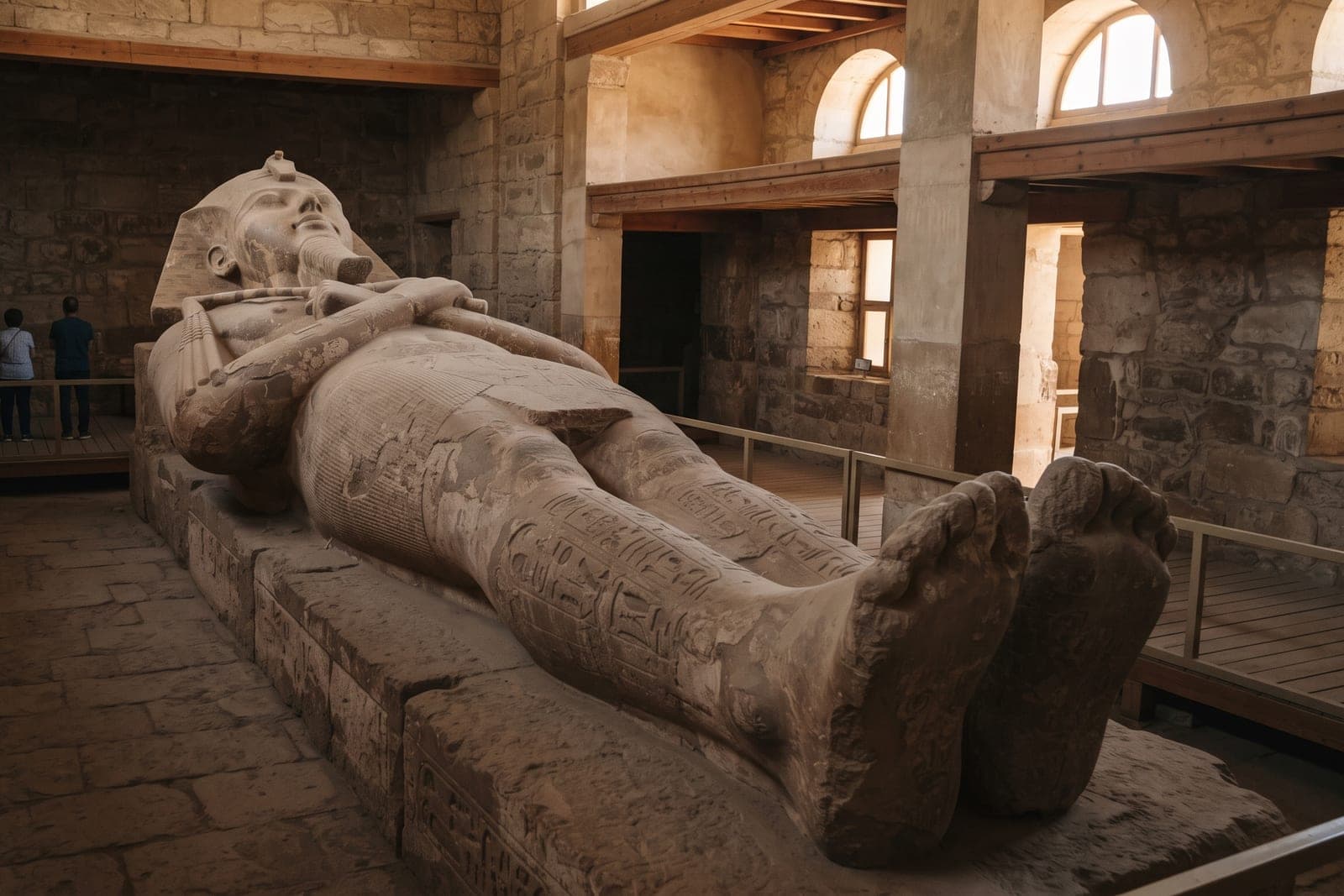
It is also why we never take travellers into a partner shop: the moment a guide earns a commission on a purchase, they stop being an ally in exactly this kind of situation. The rule is the same on every excursion, including the ones that pass through commercial areas such as Memphis and Saqqara.
What currency should baksheesh be given in?
Egyptian pounds, always. Giving euros or dollars creates two problems: the recipient has to go and change the money, often at a poor rate, and it entrenches the idea that a foreign visitor pays in another currency — which feeds precisely the solicitations described above.
One practical exception: larger end-of-trip tips for a guide or a driver are sometimes given in euros, and that causes no difficulty. For everything else, local currency is the right answer.
How should you prepare before leaving?
The only real preparation is having small change. It sounds trivial and it is nonetheless what people most often lack: you want to hand over a small note and all you have is a large one, which makes the moment awkward for everybody.
- Change some money as soon as you arrive and specifically ask for small notes.
- Keep them separate from the rest: a dedicated pocket saves you pulling out a wad in the street.
- Top up your small notes every two or three days by paying for a coffee or a fare in cash.
- Keep a reserve for the last day, which is often when you give the most.
None of this needs to be stressful. On our days out, your guide simply tells you when a gesture is expected and when it is not — one of the least glamorous and most appreciated comforts of travelling with someone. If you would rather build a whole programme around your own preferences, the tailor-made trip form is there for that.