Why choose a French-speaking guide in Egypt?
A French-speaking Egyptologist guide lets you understand Egyptian history in real depth and ask questions freely, instead of following a memorized script in broken French.
Published on Sunday, 8 March 2026Updated on Monday, 31 August 20266 min read
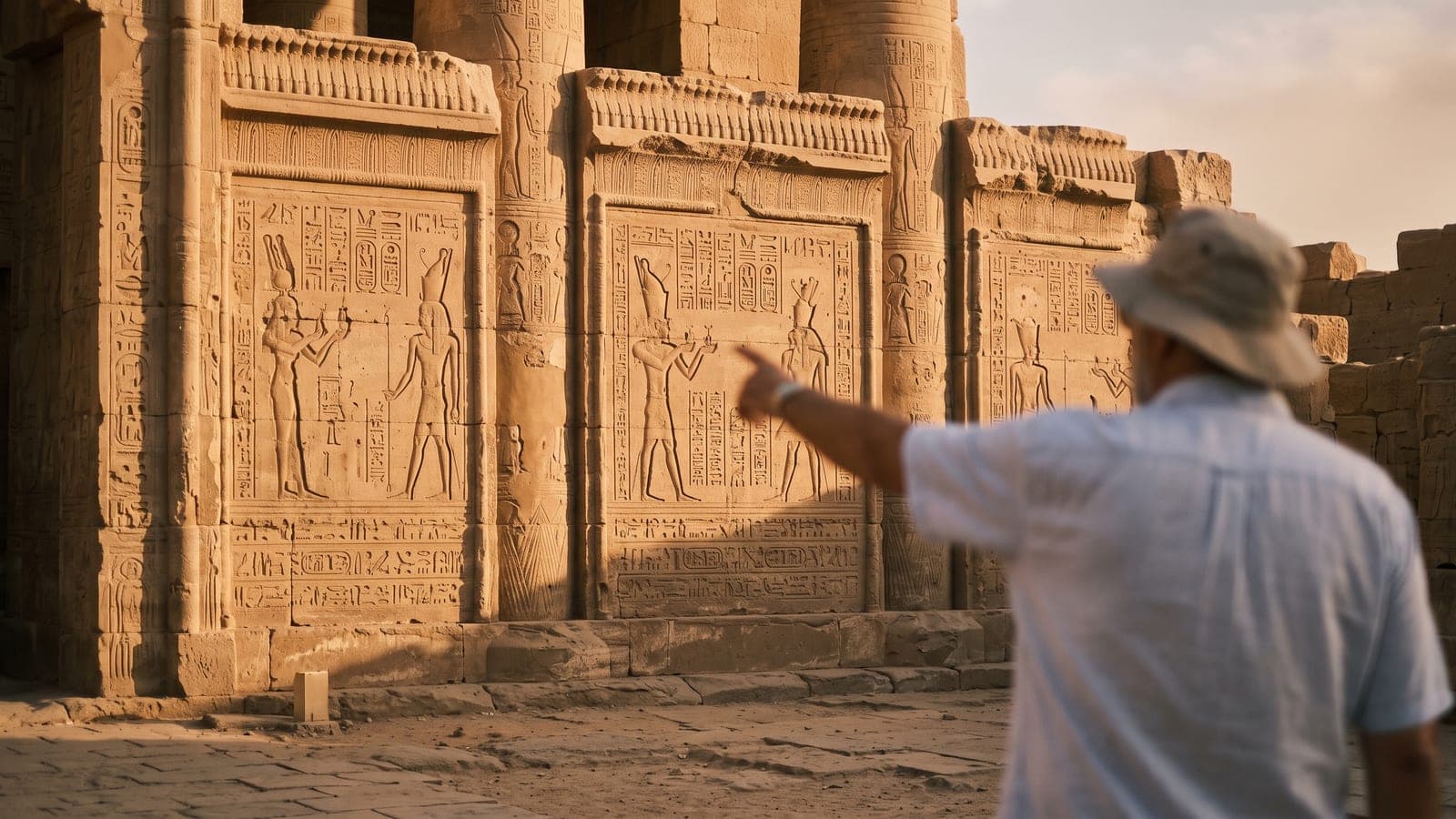
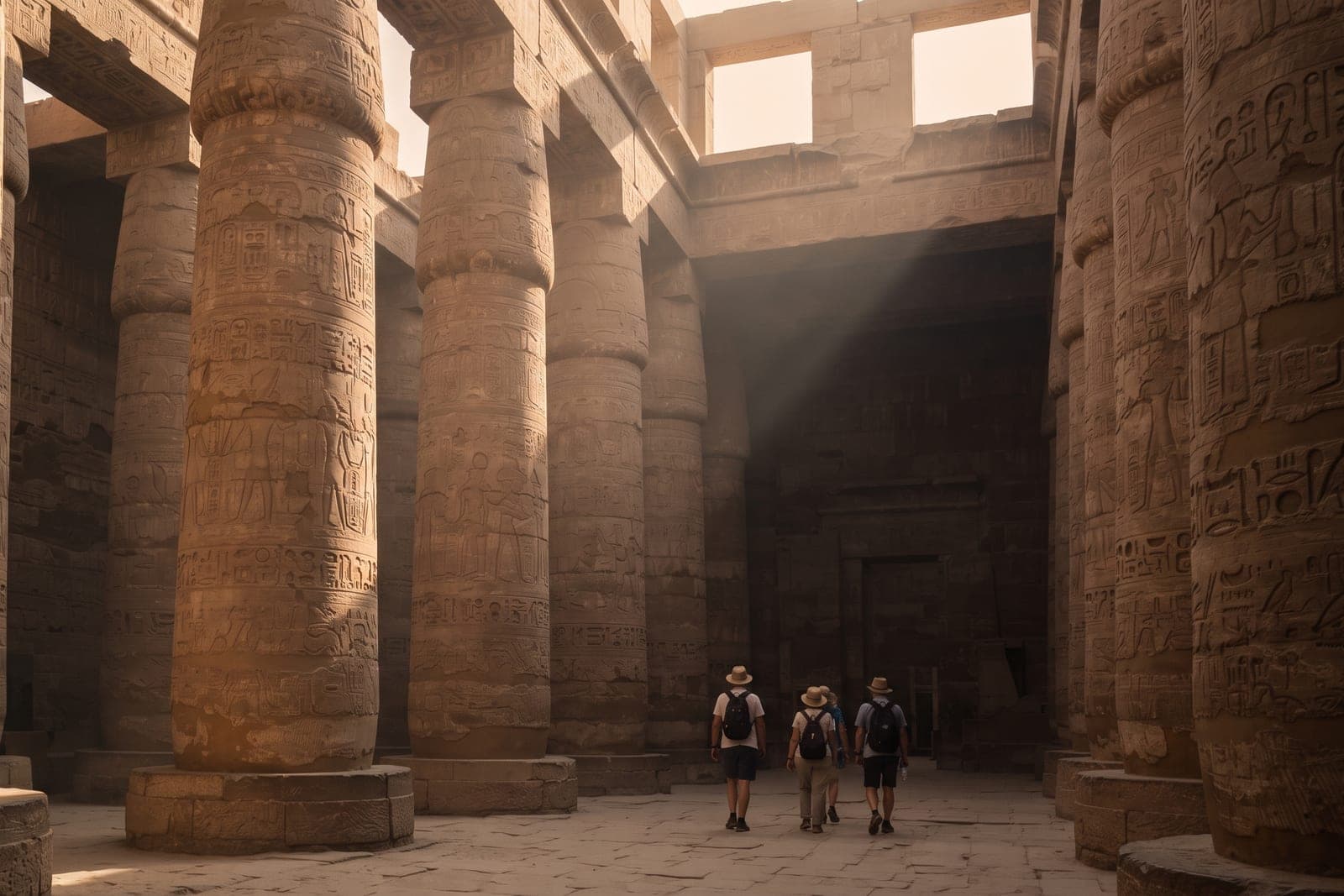
Egyptology is a dense subject — dynasties, gods, symbols, and periods that overlap across more than three thousand years. The gap between a memorised script recited in broken French and an Egyptologist guide explaining a cartouche in your own language is often the gap between sitting through a visit and actually understanding what's in front of you.
What is the difference between a guide and a tour escort?
A guide is licensed to comment on and interpret archaeological sites and museums; a tour escort (sometimes called an 'accompagnateur') handles trip logistics — transfers, timing, coordination — but is not legally authorised to do that interpretive work inside the monuments.
Why does nuance get lost with a guide whose French is limited?
Because Egyptology lives in the details: a hieroglyph that changes meaning depending on its orientation, a deity known by several names across periods, a theory still debated among researchers. With limited French, those nuances are the first thing to go — and your own questions become hard to ask, and harder still to get a real answer to rather than a rehearsed line.
What distinguishes a licensed guide from an unlicensed tour escort?
A licensed guide has passed the exams of the Egyptian Tourist Guides Syndicate, which legally authorise them to explain sites and collections. An unlicensed tour escort may be perfectly competent at organising a trip, but does not hold that legal right to interpret inside monuments and museums.
Does a private guide let you go at your own pace?
Yes: with no group to keep up with, the visit is built entirely around you — more time in front of a piece that catches your interest, a break when it's hot, a deeper question that only concerns you. That's a concrete comfort difference, not just a language one.
Why does Egyptology call for a real guide rather than a self-guided visit?
Because most of the essential information isn't written on the panels: the context behind a dynasty, the meaning of a wall scene, what makes one statue different from a thousand others. An Egyptologist guide supplies that context live, and can answer the questions a panel could never anticipate.
Ultimately, choosing a French-speaking guide in Egypt isn't just about linguistic comfort: it's what lets you actually understand what you're looking at, rather than merely look at it.