What budget should you plan for a trip to Egypt?
An Egypt budget is best costed line by line — flight, accommodation, guide, entrance tickets, day-to-day spending — rather than with a single average, because those lines behave nothing like each other.
Published on Sunday, 10 May 2026Updated on Monday, 31 August 20268 min read
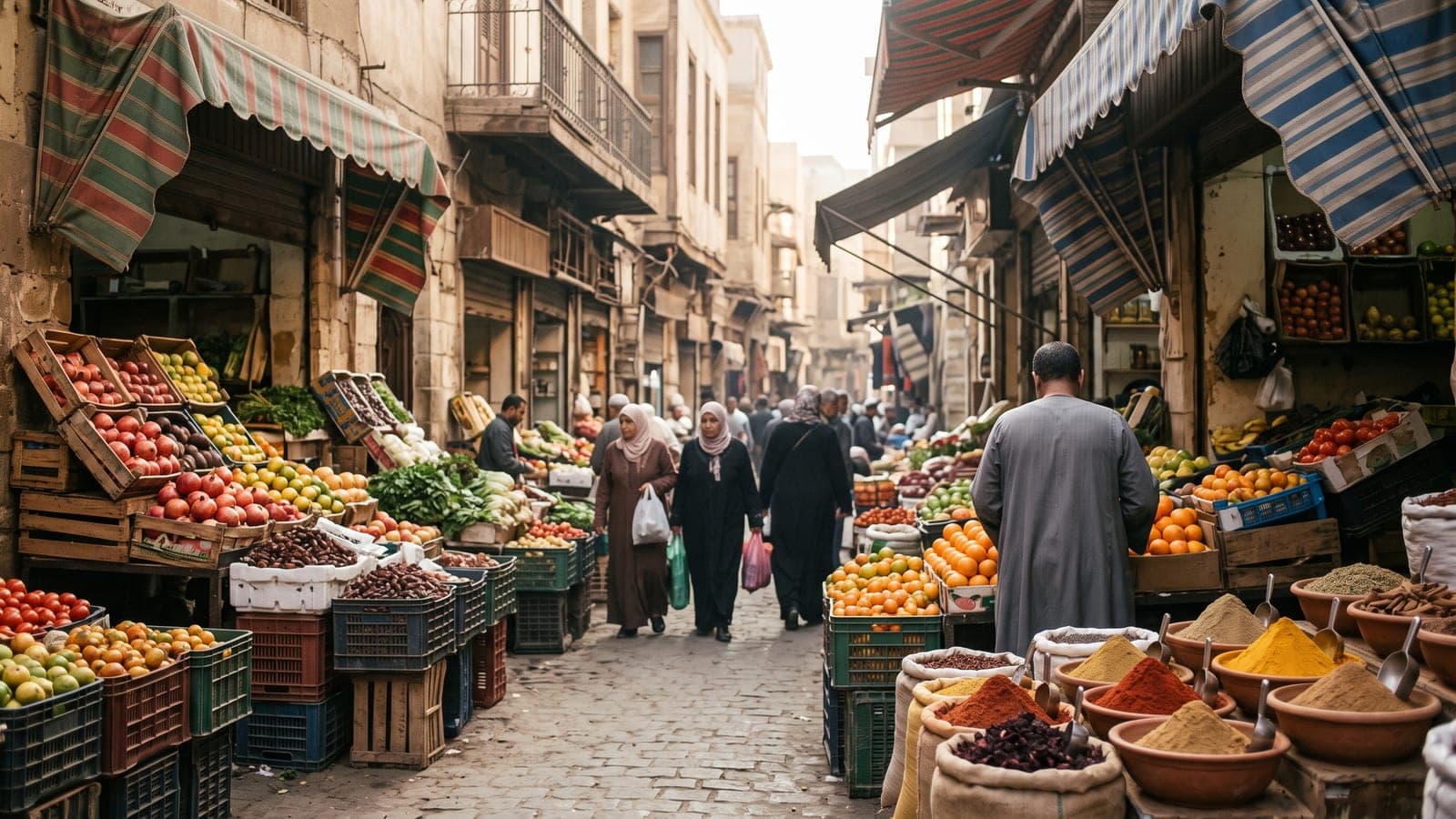
It is tempting to look for a single number: "how much does a trip to Egypt cost?". The trouble is that the answer depends almost entirely on two line items — the flight and the hotel — which have nothing to do with Egypt itself. Once you are on the ground, the cost of living is moderate, and that is where the budget becomes predictable. So this article takes the items one at a time.
What are the main expense categories for a trip to Egypt?
- The international flight, almost always the heaviest item, very sensitive to season and booking date.
- Accommodation, which runs from a family guesthouse to a palace on the Nile with no common ground on price.
- Domestic flights or the train, if the trip runs south to Luxor and Aswan.
- The guide, the one item whose price we control and publish in full.
- Entrance tickets to sites and museums, bought at the official rate.
- Living costs on the ground: meals, local transport, tips and baksheesh.
That ranking has a practical consequence: optimising an Egypt budget is mostly about the first two items and barely about the rest. Dropping a guide to save a few tens of euros on a four-figure trip is rarely a good trade — which is exactly what we set out in our article on why a French-speaking guide is worth it.
How much do entrance tickets to tourist sites cost?
Tickets are paid on site, in Egyptian pounds, and their prices are set by the Ministry of Tourism and Antiquities. They are revised regularly, usually upward, which makes any printed list obsolete fast — which is why we do not publish one.
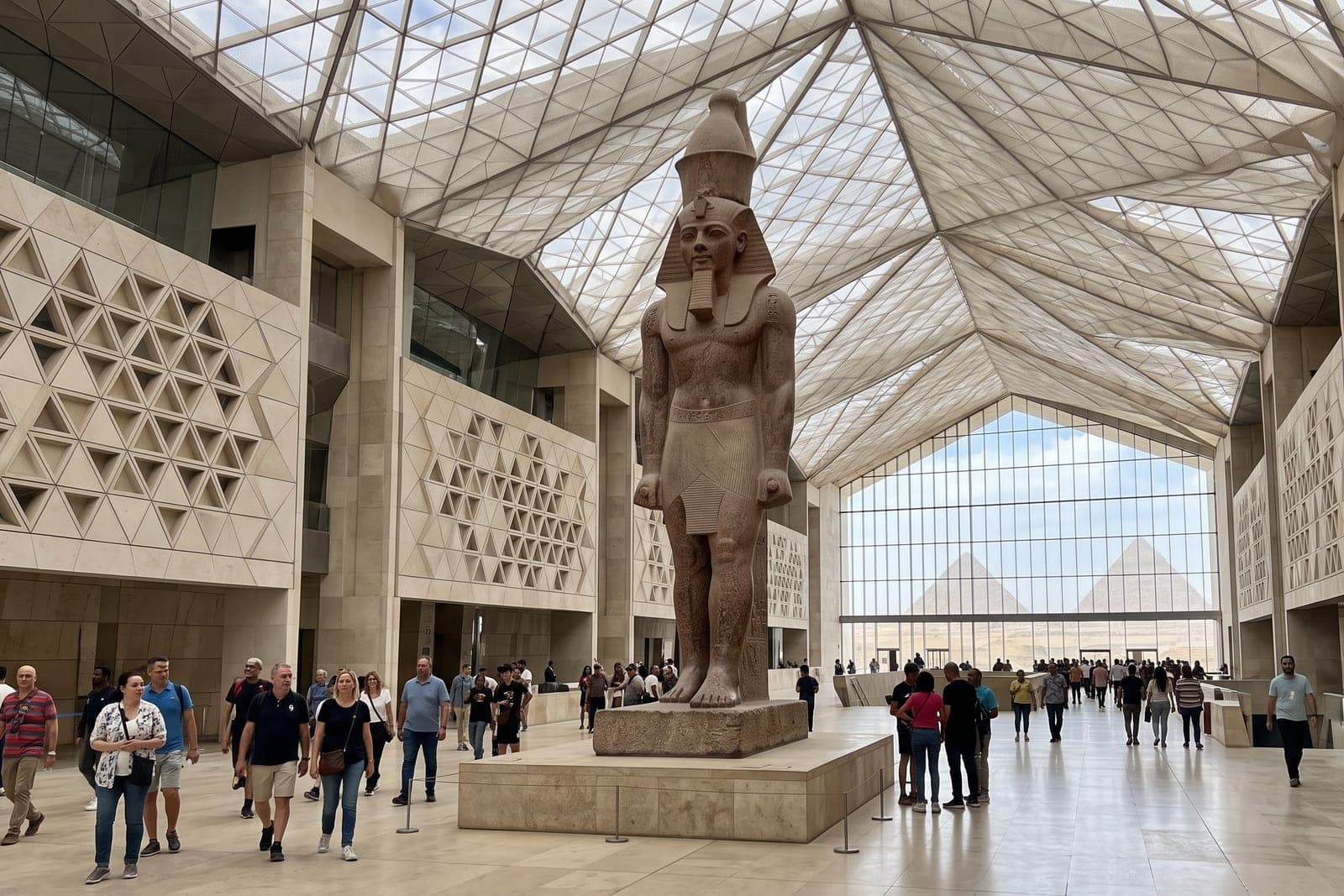
The one case where booking happens online and in advance is the Grand Egyptian Museum: the official ticket office sells timed slots, and buying at the counter is no longer possible. The adult ticket for an international visitor sat at around EGP 1,450 in August 2026 — check the current price on the official site before you go, it changes.
A point of method: we take no commission on your tickets and we do not buy them on your behalf, except at the GEM where advance online booking is compulsory. You pay the official posted price, no more and no less. We go through how that works in the article on Grand Egyptian Museum tickets.
What do private French-speaking guides charge in Egypt?
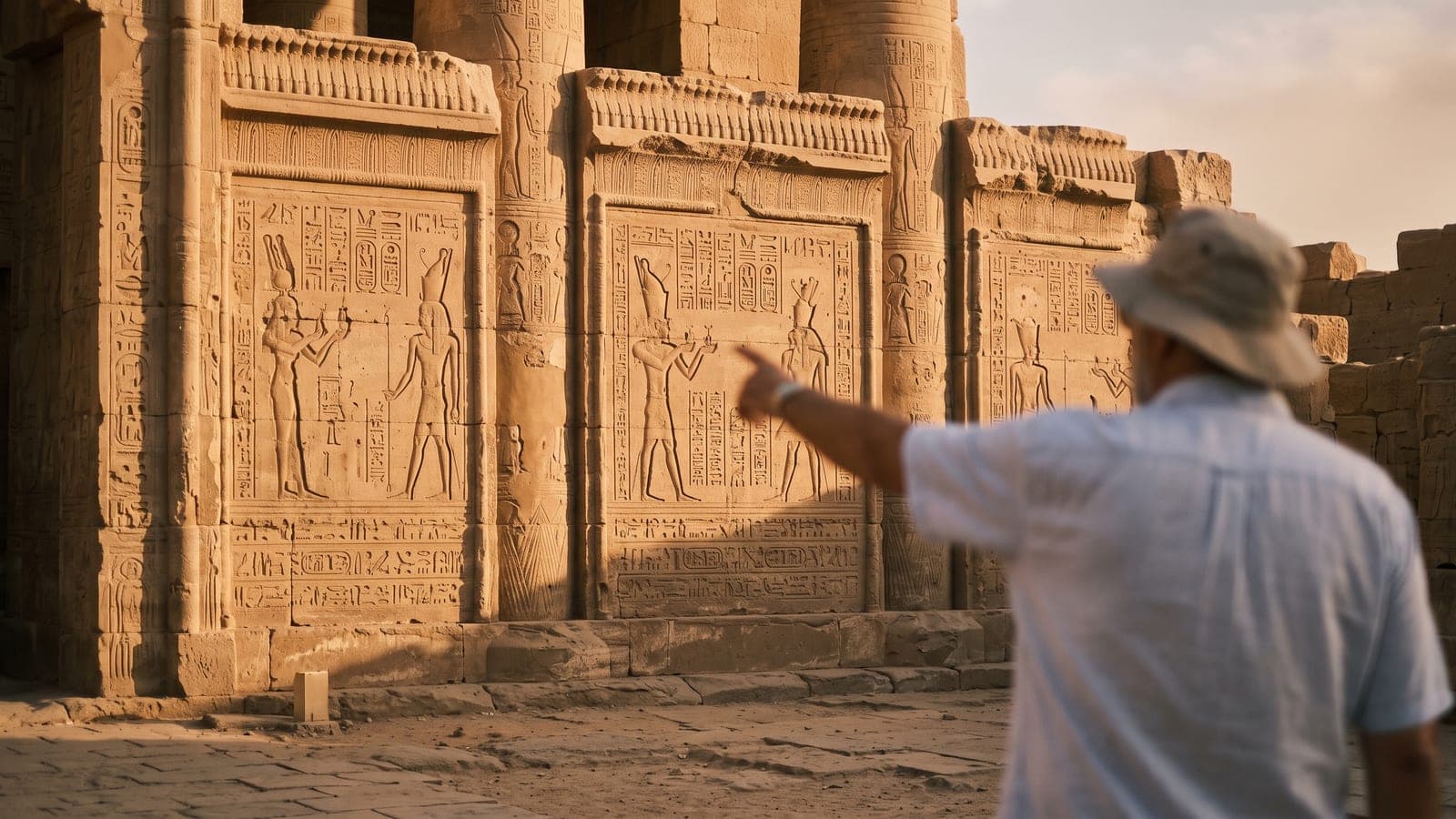
This is the one item we can put a firm number on, because it is ours. Our excursions start at two travellers, and the price shown on each page is a flat fee for the group, not a per-person figure in disguise.
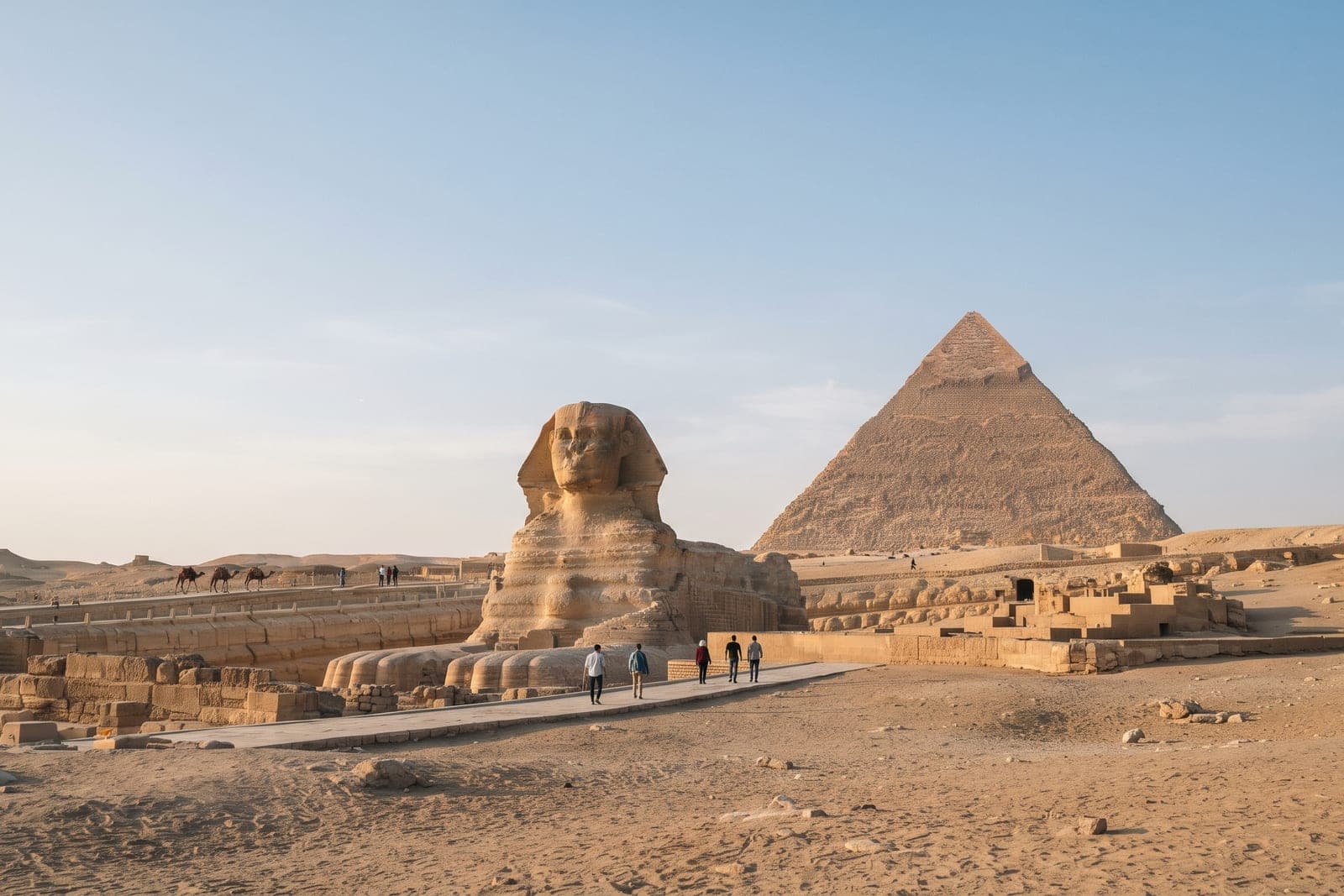
Concretely, the half-day at the Giza pyramids and the Sphinx starts at €45 per person for two travellers, guide fee and private transport included. Each additional traveller adds a fixed supplement, which drops from the fifth person onward: the larger the group, the less each person pays. The exact total appears live in the booking panel before you commit to anything.
Multi-day tours work differently: the price covers the guide’s fee alone, and transport, hotels, domestic flights and any cruise are arranged with you and billed separately, with no markup on our part. It is less tidy to display, but it is more honest than folding those items into an opaque package.
Does the Egyptian visa cost anything?
Yes, most European travellers need a tourist visa and it carries a fee — a modest one next to the rest of the budget. It can be obtained online before departure through the official e-visa portal, or on arrival at the airport for most nationalities. The exact fee and the list of eligible countries are on that portal: check them when you book rather than trusting a figure read on a forum.
What budget should you plan for accommodation?
This is the most elastic item of the trip. Egypt offers the entire spectrum, from a small family guesthouse in Cairo to the historic hotels of Aswan, and the gap between the two extremes is enormous. Two useful markers, rather than a misleading average.
- Location matters more than star rating: a well-placed hotel in Giza or central Cairo saves travel time every single day, which has real value.
- Season moves the price of the same property by a factor of two, with a peak around the end-of-year holidays.
- Rooms with a pyramid view cost noticeably more than identical rooms without it: that is a choice, not a necessity.
How does the budget change depending on the season?
Substantially, but not uniformly. Flights and accommodation rise sharply in high season (December to February) and fall back in summer. Entrance tickets do not move with the season. Neither do our guide fees: they are identical all year, which makes at least one line of the budget perfectly predictable.
Travelling in the shoulder season — October–November or March–April — remains the best compromise between comfort and cost. We go into that in our article on the best time to visit Egypt.
Should you set aside a specific budget for baksheesh?
Yes, and it is the line everyone forgets. Baksheesh is not an exceptional tip: it is a daily social practice, for small services rendered. The individual amounts are small, but they add up over a week, and arriving without small notes makes the whole thing uncomfortable for everyone involved.
The subject deserves more than a paragraph, so we gave it a whole article on tipping and baksheesh in Egypt, with the customs, the orders of magnitude and how to tell normal baksheesh from an abusive request.
How do you build a realistic budget before you leave?
The method that works: cost your flights and your nights first, since those two decide the total. Then add the guided days you want, whose price is known in advance. Finish with an envelope for living costs — meals, tickets, baksheesh — which you can adjust without giving up anything important.
If you would rather work backwards from a total budget, tell us: the tailor-made trip form has a budget band, and we build the programme around it instead of sending you a proposal you were never going to take.