Cairo
A sprawling capital on the banks of the Nile, Cairo brings together pharaonic, Islamic and Coptic Egypt within a few kilometres of each other — the near-obligatory starting point for any trip to the country.
Why visit Cairo?
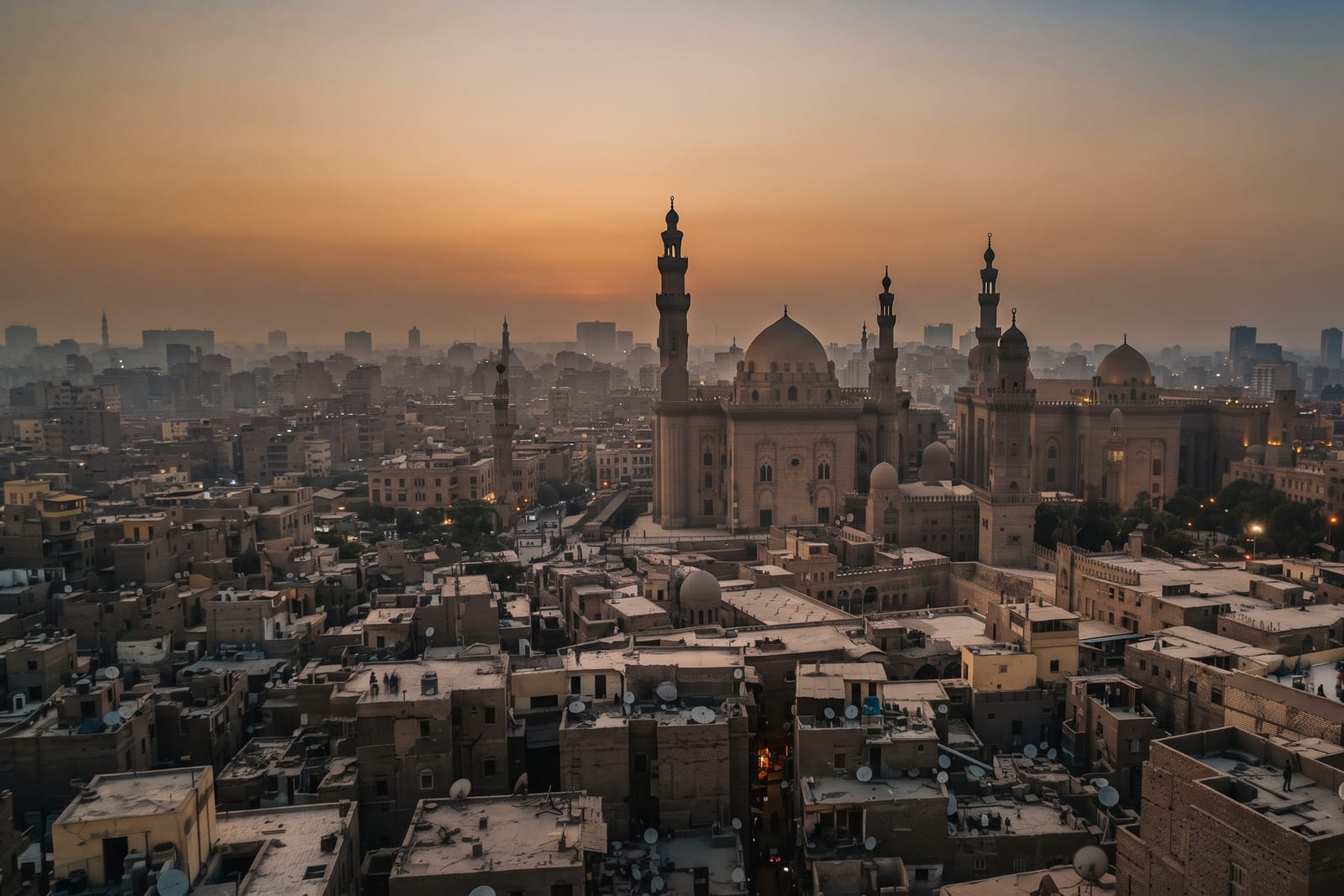
Cairo spreads across both banks of the Nile, between the nineteenth-century downtown, working-class districts and modern suburbs. Around twenty million people live here, making it one of the densest cities in the Arab world, where traffic, car horns and the call to prayer set the rhythm of every day.
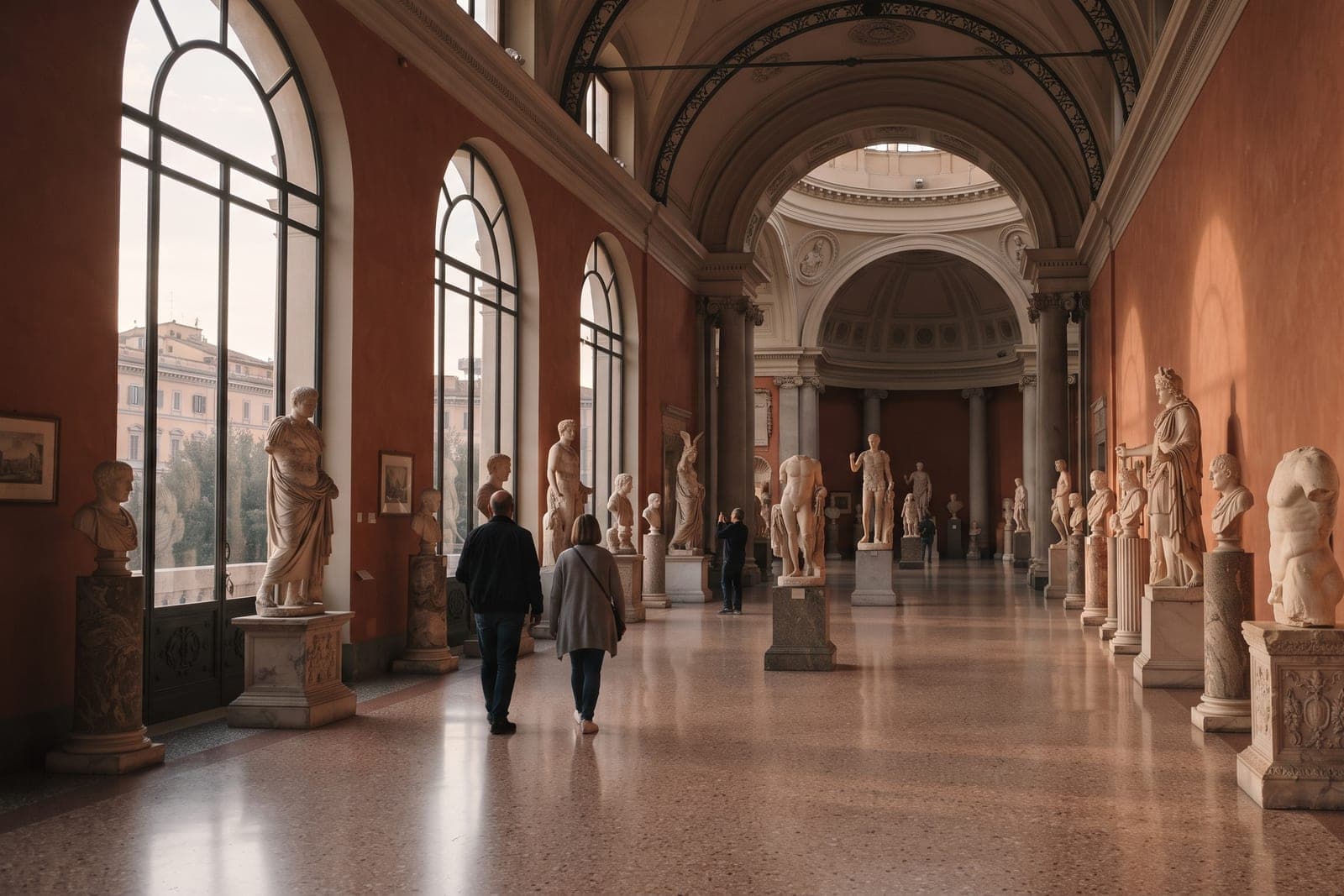
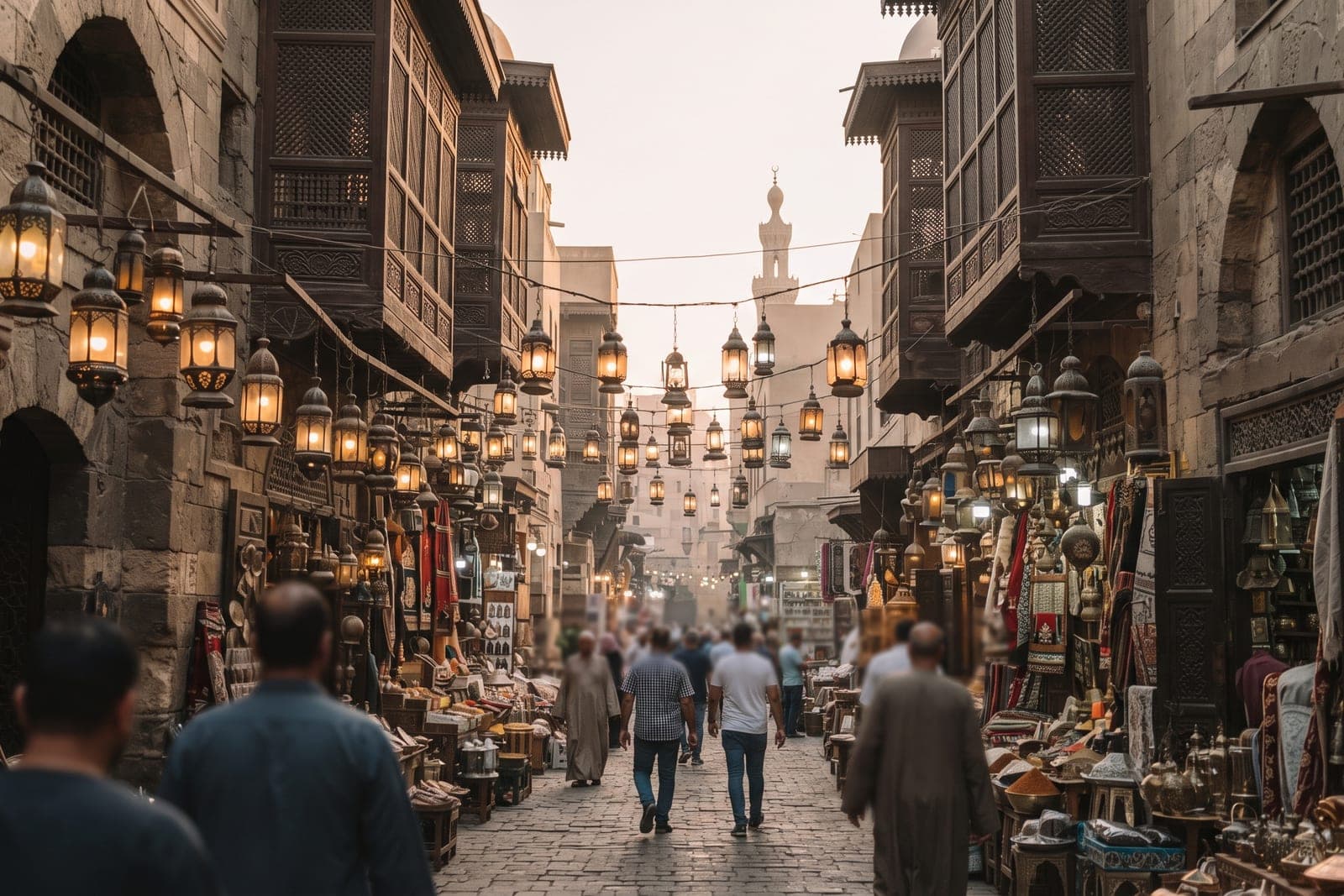
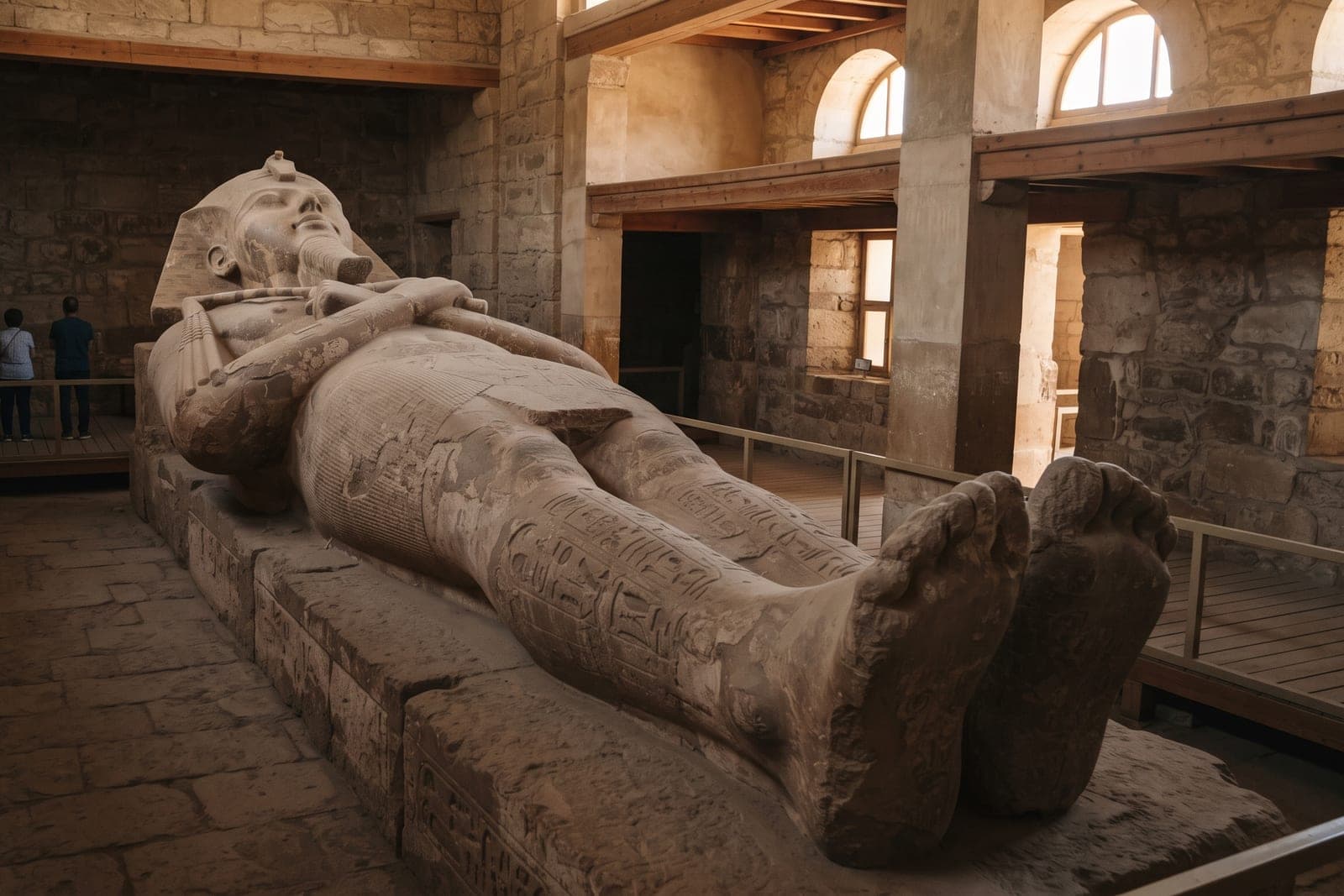
It is also an open-air museum city. Islamic Cairo lines up mosques, madrasas and souks founded between the ninth and nineteenth centuries around the Citadel of Saladin; Coptic Old Cairo preserves some of the country's oldest Christian churches; and the Grand Egyptian Museum, opened at the edge of the desert, now holds most of Tutankhamun's treasure.
For a visitor arriving from Europe, Cairo works well as a base: most international flights land here, Giza is only minutes away, and two to three days are enough to take the city’s measure before heading south.
Not to be missed
- Grand Egyptian Museum
- Islamic Cairo and the Citadel of Saladin
- Coptic Old Cairo
- Khan el-Khalili bazaar
- National Museum of Egyptian Civilization (NMEC)
- A cruise or felucca ride on the Nile